deverellsmith publishes 2026 Real Estate Salary Guide & Trends Report as UK property market enters period of recalibration
Specialist recruitment and talent solutions consultancy releases its most data-rich annual report to date, combining salary benchmarks with direct workforce sentiment from real estate professionals.

Key findings
-
Salary alone is no longer enough - 41% of professionals cite higher salary as their top priority, but work-life balance, flexibility and culture are closing the gap fast.
-
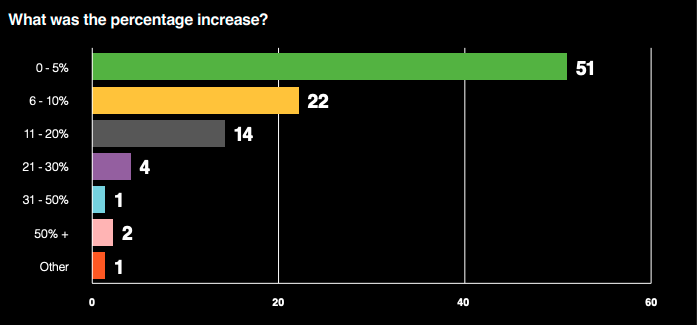
Nearly half haven't had a pay rise in over a year - 44% of respondents had not received a rise in over a year, or ever, with most increases landing at just 0 to 5%
-
The UK real estate workforce is in a holding pattern - Workforce growth hit -0.40%, with hiring more deliberate and candidate movement more measured across every division.
-
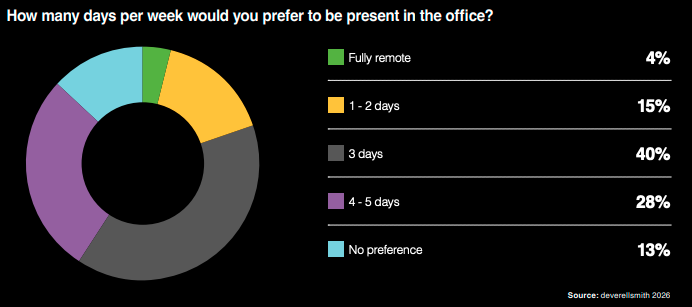
The office vs work from home - Three days in the office is now the clear preference, yet 84% would sacrifice some salary for the right benefits package.
-
Regulation is reshaping hiring across the board - From the Renters' Rights Bill to the Building Safety Act, legislative change is now one of the most significant forces driving hiring decisions across the sector.
deverellsmith has published its 2026 Real Estate Salary Guide & Trends Report, an annual benchmark of pay, hiring activity and workforce sentiment across the UK real estate sector.
Now underpinned by insights from a dedicated Workforce Sentiment Survey, the 2026 edition marks a significant evolution in the report's scope, providing a clearer picture of what is driving talent decisions across the property lifecycle, from Investment and Development to Construction, Sales, Lettings, and corporate functions.
A market in recalibration
The report paints a nuanced picture of a sector adjusting to new realities. While many areas remain employer-favourable in the short term, underlying pressures are building.
Salary growth has moderated across most divisions, hiring has become more deliberate, and candidate movement is more measured.
LinkedIn Talent Insights data cited in the report shows the UK real estate sector recorded workforce growth of -0.40% over the period, with 4,529 active job posts and 8,964 professionals changing roles.
Georgia Zambakides, Executive Director of deverellsmith, commented: "Competitive pay remains a baseline requirement, but it is no longer sufficient on its own."
She continued: "The organisations best positioned to outperform over the next 12 months are those that take a broader, more considered approach to their employee value proposition, aligning remuneration with flexibility, development, clear communication and trust."
Talent movement trends across real estate verticals
-
In Investment and Development, hiring has been largely replacement-led, with candidates increasingly prioritising job security, funding confidence and long-term opportunity over short-term pay.
-
In Construction, limited salary inflation persists outside critical technical roles, with professionals favouring stability following prolonged project delays. The report notes that salary increases in construction have largely come through internal promotion rather than lateral moves, as cash flow constraints, particularly among residential contractors, continue to suppress salary growth.
-
Sales and Lettings continue to undergo structural change with the introduction of the self-employed model and as commission models evolve in response to regulation and lower transaction volumes.
-
Professionals in Marketing, Finance and Office Support functions face growing cross-sector competition, with many prepared to move industries in search of flexibility and progression.
Inside the 2026 Workforce Sentiment Survey: Pay, flexibility and retention
Drawing on responses from the 2026 Workforce Sentiment Survey, which asked professionals spanning Construction, Estate Agency, New Homes, Commercial, Property Management, Development and Land, Rental Living, Operations and Finance, and ranging from entry level through to C-suite, the survey captures sentiment across the full breadth of the UK real estate workforce.
-
While 41% of respondents cite higher salary as their top priority, this is closely followed by work-life balance, flexibility, culture and career development.
-
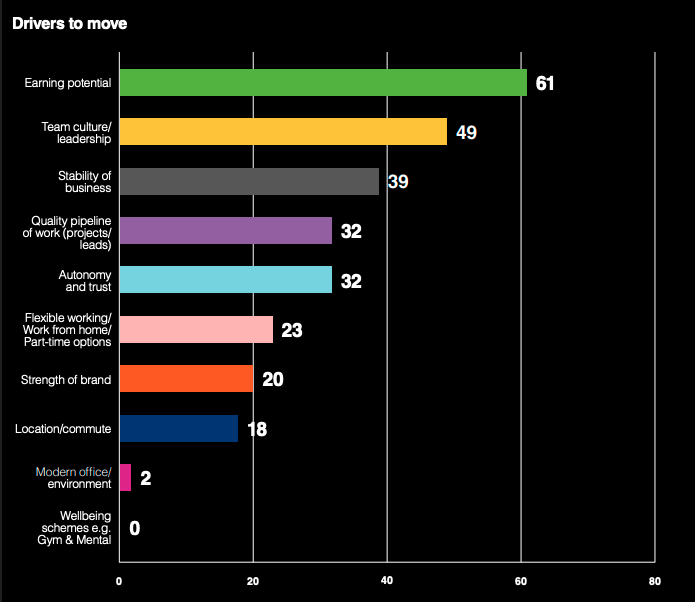
Earning potential ranks as the number one driver when professionals consider moving to a new employer, ahead of team culture and leadership and business stability. Meanwhile, bonus potential tops the list of retention drivers, followed by flexible working options and equity or profit-share schemes.
-
A significant proportion indicated they are not actively seeking to move, but would be open to the right opportunity, creating a deceptively stable market in which movement can accelerate quickly once conditions change.
-
This is borne out in pay review data: 44% of survey respondents had not received a pay rise in over a year, or had never received one, with the majority of those who had received a rise seeing increases of just 0 to 5%.
-
On bonus structure, 60% of respondents favour a combination model spanning personal, team and company performance, suggesting that purely individual or purely company-wide schemes are misaligned with workforce expectations.
-
On flexible working, 40% of respondents said three days in the office is their preferred pattern, and only 4% want to work fully remotely. Critically, 84% indicated they would consider sacrificing some salary for the right benefits package, signalling the real monetary value professionals place on flexibility and total reward.
About the report
The deverellsmith 2026 Salary Guide & Trends Report covers salary benchmarks across seniority levels in Investment, Development, Construction, Sales, Lettings, Real Estate Management, Operations, Marketing, Finance and Office Support. It draws on deverellsmith's market-wide hiring intelligence alongside responses from real estate professionals across the full property lifecycle who participated in the Workforce Sentiment Survey.




While London remains significant, regional markets including Manchester, Birmingham, Leeds, and Bristol are growing rapidly. Sectors like Build to Rent, student housing, and logistics have driven increased recruitment activity across the UK, creating more opportunities outside the capital than ever before.
Most specialist property recruiters offer contingency recruitment (payment on successful hire), retained search (exclusive partnership for senior roles), and bespoke project solutions for large-scale or complex hiring needs. The right model depends on seniority, urgency, and the specific challenges of each role.
Many people hold outdated perceptions of the sector, associating it primarily with on-site manual work. In reality, construction and development offer strategic careers in investment, development management, planning, and sustainability. Greater visibility through industry advocacy, school engagement, and senior leadership voices is needed to change this perception.
The industry needs visible senior leaders who will advocate for careers in the built environment. This means speaking at schools and universities, sharing career stories publicly, and demonstrating the strategic, impactful nature of roles in construction and development. Better storytelling and earlier engagement with young people are essential.
Key growth sectors outside London include Build to Rent and rental living, purpose-built student accommodation, logistics and industrial property, residential development, and regional commercial real estate. Investment in regional cities has increased significantly, creating demand for skilled professionals across these areas

Sign up to devcast...
Whether you’re looking to get hired, or looking to hire then we’ve got
you covered. Never miss an episode.